When Kids Feel Big Emotions… But Don’t Have the Words
Children feel everything deeply.
Frustration.
Fear.
Sadness.
Overwhelm.
But they don’t always know how to explain it.
So instead of saying “I feel anxious,”
they cry… withdraw… or act out.
And in those moments, they don’t need explanations.
They need something they can hold onto.

Why Soft Toys Matter More Than You Think
To adults, a plush toy might seem simple.
But to a child, it becomes:
A listener
A source of comfort
A safe place for emotions
Soft toys give children a way to express feelings without pressure.
What Experts Say About Comfort Objects
Child psychologist Dr. Penelope Leach explains that soft toys help children:
Externalize emotions
Feel understood without needing words
Process experiences in a safe, controlled way
This means when a child talks to their plushie…
They’re not just playing.
They’re practicing emotional regulation.

How Kids Use Plushies to Process Emotions
You might notice your child:
Hugging their plush after a meltdown
Talking to it during quiet moments
Bringing it along during stressful situations
These small actions are actually powerful.
What’s Really Happening
1. Emotional Release
The plush becomes a safe outlet for feelings.
2. Self-Soothing
Touch and softness help calm the nervous system.
3. Role-Playing
Children act out emotions through their plush, helping them understand what they feel.
The Brain Science Behind It
According to the National Scientific Council on the Developing Child:
Early emotional experiences shape how the brain handles stress later in life.
That means learning to cope early = stronger emotional resilience later.

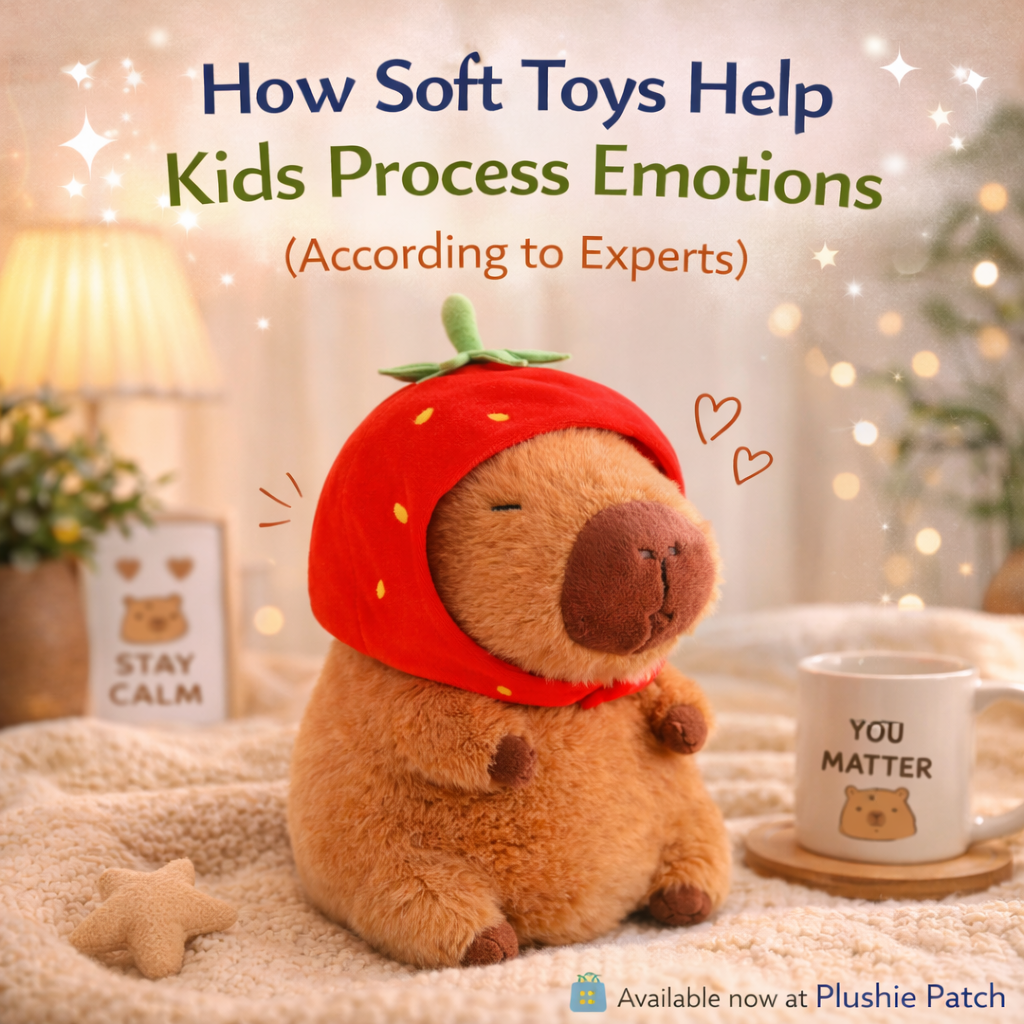
Why the Capybara Plush Works So Well
Capybaras are naturally calm, gentle animals.
That energy translates perfectly into a comfort object.
What Makes It Special
Soft, soothing texture for calming touch
Gentle, relaxed design that signals safety
Non-overstimulating appearance
A quiet presence children connect with instantly
It doesn’t demand attention.
It simply supports.
A Safe Space in Plush Form
For a child, a plushie becomes something they can trust.
It doesn’t judge.
It doesn’t leave.
It doesn’t overwhelm.
It’s just there.
And that consistency matters more than we realize.

Emotional Growth, One Cuddle at a Time
That capybara plush your child won’t let go of?
It’s not “just a toy.”
It’s helping them:
Understand their feelings
Calm themselves down
Build confidence in handling emotions
Quietly. Gently. Naturally.
Final Thought
Children don’t need perfect words to grow emotionally.
They need tools.
Soft, simple, comforting tools.
And sometimes…
That tool looks like a plush toy.
Support your child’s emotional journey with the Capybara Plush—available now at PlushiePatch.shop.