Key takeaways
-
Learning how to wash plush toys the gentle way keeps them soft and clean, since heat and harsh washing are what ruin shape, color, and stitching.
-
Most plushies need only surface cleaning, with a full hand wash or careful machine wash saved for deeper messes.
-
A slow air dry, no bleach, and a check of the care label protect your plush, so a soft bunny stays huggable for years.
Knowing how to wash plush toys saves a lot of worry. A favorite bunny gets grubby over time, yet one wrong wash can leave it flat, faded, or lumpy. Gentle care is the answer. Most plushies clean up well with a soft touch and a little patience, no rough cycles needed. Plushie Patch makes its plush toys from soft cotton and PP cotton, which handle careful cleaning nicely. Want your plush to stay soft and bright? Here is the safe way to wash it.
How to Wash Plush Toys Safely
The safe way to wash plush toys starts with a simple rule: go gentle, and avoid heat. Soft fabric and PP cotton filling clean up well with mild soap and cool water, but they react badly to hot water, bleach, and tumble dryers. Treat a plush kindly, and it stays soft and shaped.
What are the main cleaning methods? You have three to choose from, depending on how dirty the toy is:
-
Surface clean for small marks and daily dust
-
Hand wash for a deeper, all-over clean
-
Machine wash only when the label allows it
Which method should you reach for? Start with the gentlest one that fits the mess. A small smudge needs only a damp cloth, not a full wash. A musty or all-over grubby plush calls for a hand wash. Save the machine for sturdy plushies with a label that permits it. Less washing, done gently, protects the toy best.
Why does heat cause so much damage? Hot water and dryers can shrink fabric, melt or clump filling, fade color, and warp a careful face. A grumpy bunny can lose its frown to a hot cycle. Cool water and air drying avoid all of that. Keep the temperature low, and the plush keeps its shape and charm.
What about the filling inside? PP cotton holds up well to gentle washing, but soaking and wringing can shift or clump it. Press water out softly instead of twisting, and reshape the plush while damp. Handle the filling with care, and the body stays even and springy. The rest of this guide walks through each method step by step.
Before You Wash: Check the Label
Before any wash, check the care label first. The label tells you what the plush can handle, which saves you from a costly mistake. A quick read takes seconds and protects the toy. Where is the label, and what should you look for?
Look for these details on the tag:
-
Wash symbols, like hand-wash-only or a temperature limit
-
A “surface clean only” note for delicate plushies
-
Material info, such as cotton and PP cotton
-
Any warnings about heat, bleach, or drying
Why does the label matter so much? Plushies vary. Some take a gentle machine wash, while others, especially ones with glued parts, sound boxes, or delicate trims, need surface cleaning only. Washing a “surface clean only” plush in a machine can wreck it. Reading the tag first tells you the safe limit, so you pick the right method.
No label, or one you cannot read? Treat the plush as delicate and start with surface cleaning. When unsure, the gentle route is the safe one. You can move to a hand wash if a surface clean is not enough, but you cannot undo damage from too harsh a method. Caution costs nothing here.
What if the plush has electronics or batteries? Never submerge it. Toys with sound boxes or lights need spot cleaning only, with care to keep the electronic part dry. Remove batteries first if you can. Check for hard parts, glued features, or trims too, since those often rule out machine washing. A careful label check sets you up to clean safely.
Surface Cleaning for Small Marks
Surface cleaning handles most everyday plush messes. Small marks, light dust, and the odd smudge rarely need a full wash. A spot clean is faster, gentler, and safer for the toy. How do you do it well?
Follow these steps for a surface clean:
-
Mix a little mild soap into cool water
-
Dip a soft cloth and wring it nearly dry
-
Dab the mark gently, without soaking the fabric
-
Wipe with a clean, damp cloth to remove soap
-
Air dry the spot fully before storing
Why start with surface cleaning? It solves small problems without the stress of a full wash. A damp cloth lifts most marks, and the plush dries fast since only a small area gets wet. The filling stays dry, so there is no clumping or long drying time. For daily upkeep, a quick spot clean is all most plushies need.
Got a sticky or set-in mark? Work slowly with the damp cloth, dabbing rather than rubbing hard, which can spread the stain or rough up the fabric. A tiny bit of mild soap helps lift it. Rinse the spot with a clean damp cloth so no soap is left behind, then let it air dry. Patience beats force for surface stains.
How often should you surface clean? Every week or two for display plushies, and right away for spills. Quick action stops marks from setting. Keep a soft cloth handy, and small messes never become big ones. Surface cleaning is the everyday method that keeps a plush looking fresh between rare deeper washes.
Hand Washing a Plush Step by Step
When a plush needs an all-over clean, hand washing is the safest deep method. It cleans well while staying gentle on fabric, filling, and stitching. Ready to hand wash a plush? Follow these steps in order.
|
Step |
What to do |
|---|---|
|
1. Fill |
Use a basin of cool water with a little mild soap |
|
2. Submerge |
Gently lower the plush and press to soak it |
|
3. Clean |
Squeeze the soapy water through the fabric softly |
|
4. Rinse |
Swap to clean cool water, press until soap clears |
|
5. Press |
Push out water gently, without wringing |
|
6. Shape |
Reshape the damp plush, then air dry fully |
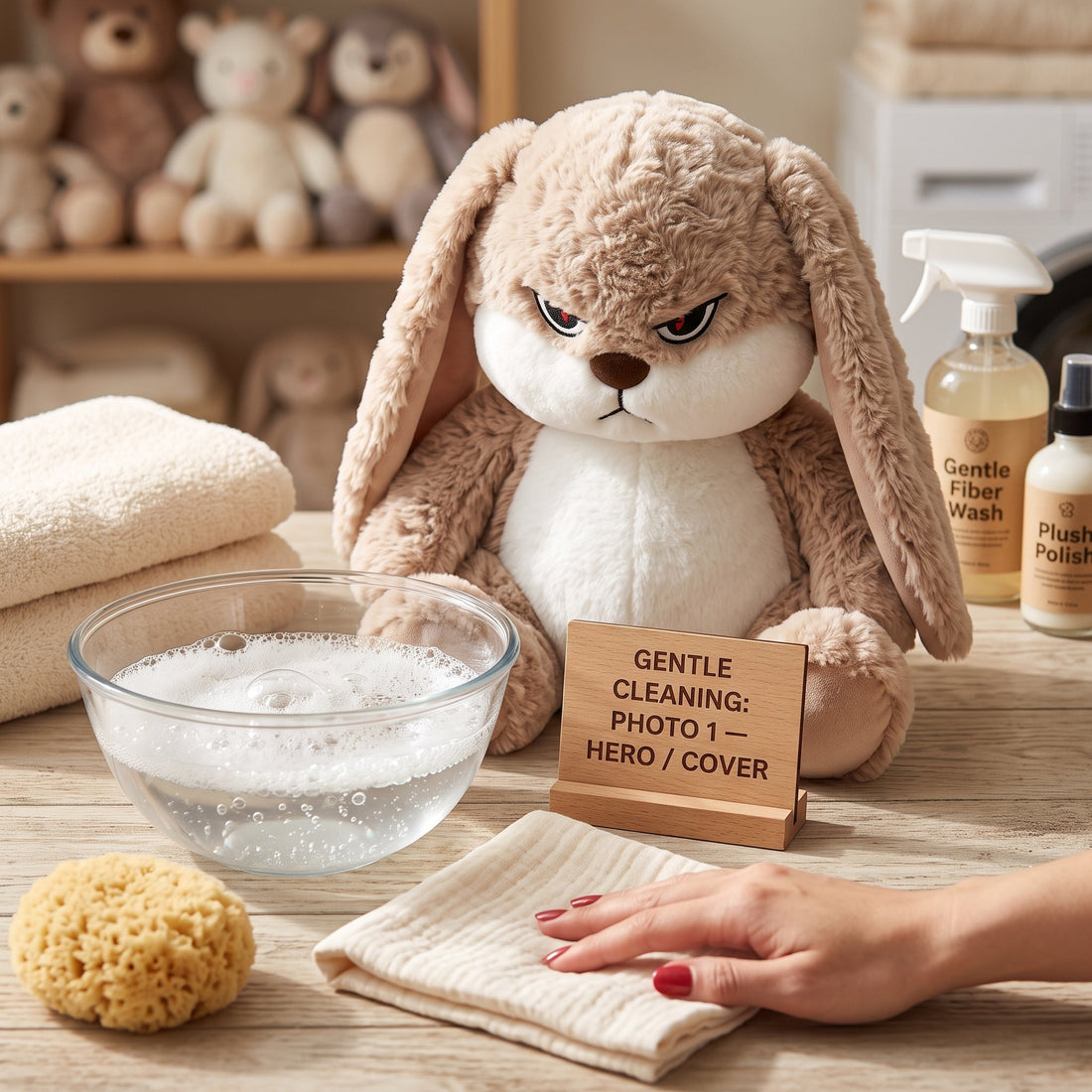
Start by filling a basin with cool water and a small amount of mild soap or gentle detergent. Lower the plush in and press it under the water to soak through. Squeeze the soapy water through the fabric a few times to lift dirt. Avoid scrubbing hard, since rough handling can mat the fur or strain the seams.
Rinsing is the step people rush, but it matters. Swap the soapy water for clean cool water, then press the plush until the water runs clear and no soap remains. Leftover soap can stiffen fabric and attract dirt later. Rinse twice if needed. Once clear, the plush is clean and ready to dry.
How do you remove water without damage? Press, do not wring. Twisting forces the filling to clump and can pop seams. Instead, press the plush between your hands or against the basin to push water out, then roll it in a towel to absorb more. Reshape it while damp, fluffing the body back to its full form, then move on to drying.
Machine Washing: When It’s Okay
Can you machine wash a plush? Sometimes, but only when the label allows it and the toy has no fragile parts. A machine is harsher than hand washing, so reserve it for sturdy, all-fabric plushies. How do you do it as safely as possible?
Follow these machine-wash safeguards:
-
Check the label for a machine-wash symbol first
-
Use a mesh laundry bag or pillowcase to protect the plush
-
Pick a gentle, cold cycle with mild detergent
-
Skip the spin or use the lowest setting
-
Never tumble dry, since heat warps shape and filling
Why use a laundry bag? A mesh bag or a tied pillowcase shields the plush from the drum’s tossing, which protects seams, fur, and any face details. A gentle, cold cycle cleans without the heat and force that damage soft toys. Mild detergent and no fabric softener keep the fabric in good shape.
Which plushies should never go in the machine? Toys with electronics, sound boxes, glued features, delicate trims, or a “surface clean only” label. For those, stick to hand or surface cleaning. When the label gives the go-ahead and the plush is all soft fabric, a careful cold cycle in a bag is reasonable. Air dry afterward, and check the stitching once it is clean.
Drying a Plush Without Damage
Drying is where many plushies get ruined, so go slow. Air drying protects shape, fabric, and filling, while a hot dryer does the opposite. How do you dry a plush the safe way? Patience is the main tool.
Follow these drying steps:
-
Press out excess water with a towel, gently
-
Reshape the plush by hand while it is damp
-
Lay flat or hang in a well-aired spot
-
Keep away from direct heat and strong sun
-
Wait until fully dry inside before storing
Why avoid the tumble dryer? Heat shrinks fabric, melts or clumps PP cotton filling, and can warp a plush’s face and form. A grumpy bunny can come out lumpy or misshapen from a hot cycle. Air drying skips all of that. The trade-off is time, since a soaked plush can take a day or two to dry fully, but the result is worth it.
How do you speed air drying safely? Press more water out with a dry towel first, then place the plush near a fan or an open window. Good airflow, not heat, is what dries it faster. Reshape it as it dries so the body stays even. Turn it now and then for an all-over dry.
Why does drying fully matter? A plush that is damp inside can grow mildew and smell musty, especially around the filling. Make sure the core is dry, not just the surface, before you put it away. Press the center to check. Once fully dry and reshaped, your plush is soft, clean, and ready to display or cuddle again.
Deep Cleaning, Odors, and Dust
Beyond stains, plushies pick up dust, dust mites, and the odd musty smell over time. Deep cleaning and odor care keep them fresh and healthier to cuddle. How do you handle dust and smells without a full wash? A few easy tricks do the job.

Try these methods for dust and odors:
-
Baking soda in a bag with the plush for a few hours, then shake out
-
A gentle vacuum on low, over a cloth, to lift surface dust
-
Fresh air near an open window to clear smells
-
A freezer bag spell to help with dust mites, then air it
Why does baking soda work for smells? It absorbs odors without water. Pop the plush in a bag with a few spoonfuls of baking soda, leave it a few hours, then shake it out and brush off the powder. The plush comes out fresher, with no wash needed. A gentle brush afterward fluffs the fur back up.
What about dust and dust mites? A low-suction vacuum over a thin cloth lifts surface dust safely. For dust mites, some people seal a plush in a bag and place it in the freezer for several hours, then air it out, since cold helps reduce them. Airing the plush near an open window also freshens it between washes.
How often should you deep clean? A few times a year for display plushies, or sooner if one smells musty or looks dusty. Regular light care, like dusting and airing, cuts down on the need for full washes. Keep up with small steps, and a plush stays fresh, soft, and pleasant to hug for a long time.

Mistakes That Ruin a Plush
A few washing mistakes can wreck a plush fast. Knowing them helps you avoid a flat, faded, or lumpy result. What should you never do when cleaning a soft toy? Steer clear of these.

The worst plush-washing mistakes:
-
Using hot water, which shrinks fabric and warps shape
-
Tumble drying, since heat clumps filling and fades color
-
Wringing the plush, which pops seams and lumps the stuffing
-
Using bleach, which ruins color and weakens fabric
-
Skipping the label check, leading to the wrong method
-
Storing it damp, which invites mildew and smells
Why is heat the biggest enemy? Both hot water and dryers cause the most common, hardest-to-fix damage. Shrunk fabric, melted filling, and a warped face cannot be undone. Cool water and air drying avoid all of it. When in doubt, keep the temperature low through every step.
Wringing is another quiet plush-killer. Twisting to remove water forces the filling to bunch and strains the stitching, leaving a lumpy, weakened toy. Press water out gently instead, and reshape while damp. Bleach, meanwhile, fades and weakens fabric, so always skip it and stick to mild soap. Avoid these mistakes, and your plush survives cleaning soft, bright, and whole.
Frequently Asked Questions
How do you wash plush toys without ruining them?
Go gentle and avoid heat. Surface clean small marks with a damp cloth and mild soap, hand wash deeper messes in cool soapy water, and machine wash only if the label allows, using a mesh bag and a cold cycle. Air dry away from heat, never tumble dry, and never wring, bleach, or use hot water.
Can you put a plush toy in the washing machine?
Only if the care label permits it and the plush has no electronics, glued parts, or delicate trims. Place it in a mesh laundry bag or pillowcase, use a gentle cold cycle with mild detergent, and skip the spin. Always air dry afterward. For “surface clean only” plushies, stick to spot cleaning instead.
How do I dry a plush toy?
Air dry only. Press out water with a towel, reshape the damp plush by hand, then lay it flat or hang it in a well-aired spot away from direct heat and sun. A fan or open window speeds it up safely. Make sure the filling is fully dry inside before storing, to avoid mildew and musty smells.
How do I get a bad smell out of a plush?
Use baking soda. Seal the plush in a bag with a few spoonfuls for a few hours, then shake it out and brush off the powder, which absorbs odors without water. Airing the plush near an open window also helps. For lingering smells, a gentle hand wash and full air dry will freshen it completely.
How often should I wash a plush toy?
Surface clean display plushies every week or two, and spot clean spills right away. A full hand wash is only needed a few times a year, or when a plush is grubby or musty. Frequent gentle care, like dusting and airing, reduces the need for deep washes and keeps the plush soft and fresh.