Key Takeaways
- Halloween night lights for kids give a soft, friendly glow that keeps the fun of the season without the scary shadows that keep little ones awake.
- A good light eases fear of the dark, doubles as decor, and helps a bedtime routine hold even during a sugar-and-excitement-filled week.
- Warm color tones, a timer, and gentle brightness matter far more than spooky looks when you want a child to sleep.
Halloween night lights for kids solve a problem most parents only notice at 9pm on October 30th, when the house is full of decorations and a four-year-old decides the hallway is haunted.
The season is thrilling. It is also loud, sugary, and full of shadows that look different than they did in September.
A small soft light in the corner carries a lot of weight that week. It says the room is still your room and morning is still coming.
Why a Soft Glow Helps During Halloween Week
The season stacks small stressors at once. Darker evenings, decor on every surface, a plastic skeleton by the door. For an adult that reads as festive. For a toddler, some of it reads as confusing, and confusion at bedtime becomes stalling and calling out.
A gentle light gives a child an anchor:
- It shrinks the scary parts of a dark room by making the space visible but calm.
- It gives the child a bedtime job — press the light — which builds routine.
- It creates a pool of warmth rather than a harsh overhead beam.
- It lets you check on them without a bright, sleep-wrecking bulb.

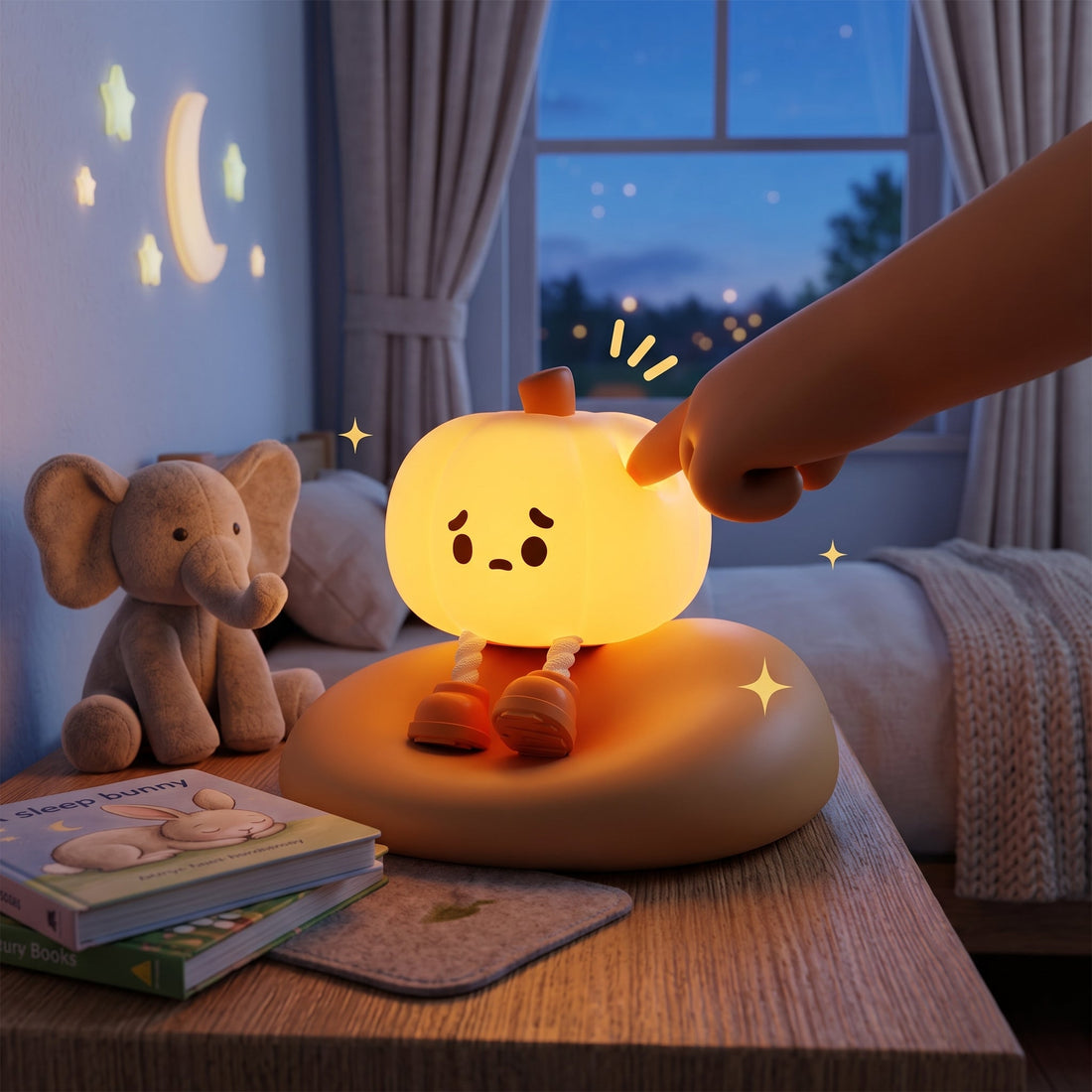
A Little Pumpkin Night Light leans into the season with a warm, dimmable glow — and the warmth is the part doing the real work.
Color temperature matters more than brightness
Kids under six respond to warm amber and soft orange tones, which tell the brain the day is ending. Cool blue and white do the opposite. Check the tone first and the cuteness second.
Cute-Spooky vs Calm: Picking the Right Light

A Ghost Night Light with a round cartoon face lands in the sweet spot — clearly festive, but gentle rather than creepy.
For a more sensitive child, skip the theme and use a plain warm light, saving character pieces for the hallway.
Features That Matter More Than the Costume
| Feature | Why it matters | Look for |
|---|---|---|
| Warm color | Cool light delays sleep | Amber / warm white |
| Dimming | Bedtime needs less light | 2–3 levels |
| Timer | Aids sleep, saves battery | 15–30 min shut-off |
| Touch control | Little hands use it alone | Simple tap |
| Soft material | Safe for cuddles | Silicone body |
A Duck Night Light pairs a warm glow with a timer and a squishy body that survives being flung off the bed.
Where to Put the Fun, Where to Keep It Calm
- Hallway / living room: the spooky-fun pieces belong here.
- Bedroom: keep it calm — a warm plain glow only.
- Nursery: gentlest of all, no themes, warm and low.

A comfort object helps too — a Breathing Otter Plush gently rises and falls, giving a child something soothing to breathe along with while the light handles the room.
Frequently Asked Questions
What color night light helps kids sleep best?
Warm tones — amber and soft orange signal the day is ending. Keep cool blue and white for daytime.
Are Halloween-themed lights too scary for young kids?
Depends on the child and design. A cute round-faced ghost delights most kids; an intense design can unsettle a sensitive one. Keep themed pieces out of the sleep space if unsure.
How long should a night light stay on?
A 15–30 minute timer suits most kids, letting them drift off in a glow before it shuts off on its own.