Key takeaways
-
Plush toys are safe for kids when they meet safety standards, so checking for CE certification, safe materials, and an age rating is the key step before buying.
-
CE certification shows a toy has met European safety rules, covering things like materials, small parts, and flammability.
-
Smart checks at home, like supervising young children and inspecting seams, keep a plush safe long after the purchase.
Are plush toys safe for kids? For most well-made ones, yes, but the details matter. A soft toy is only as safe as its materials, build, and standards. Knowing what to check, like CE certification and age ratings, helps you buy with confidence. Plushie Patch makes its plush toys with safe materials and proper certification for that reason. Worried about safety for a little one? Here is a clear guide to what makes a plush safe.
Are Plush Toys Safe for Kids?
Plush toys are safe for kids when they meet recognized safety standards and suit the child’s age. A well-made plush from a reputable maker, with safe materials and certification, poses little risk. The concern comes with cheap, uncertified toys that may use unsafe parts or materials.
What makes a plush potentially unsafe? A few things to watch for:
-
Small detachable parts, a choking risk for young kids
-
Loose stitching, which can leak filling
-
Harmful materials, like toxic dyes or stuffing
-
No safety certification, meaning unverified standards
Why does certification matter so much? It shows the toy has been tested against safety rules, rather than just claimed to be safe. A CE-certified plush has met European standards covering materials, small parts, and more. Buying certified toys removes much of the guesswork around safety.
Are plush toys safe for babies and toddlers? Extra care is needed for the youngest children. Many plushies carry a 3+ age rating, since younger babies put everything in their mouths and need toys made for that age. For toddlers and older kids, a certified, well-stitched plush with no loose parts is generally safe with normal supervision.
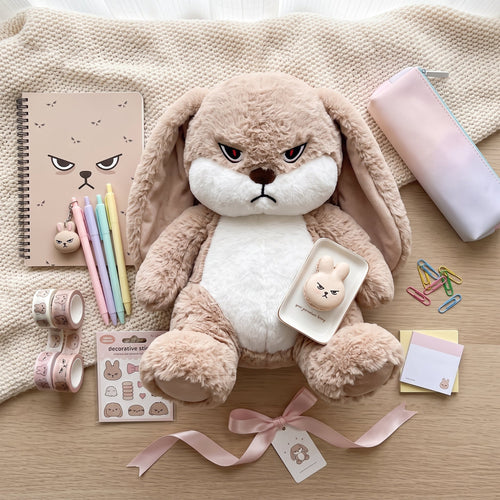
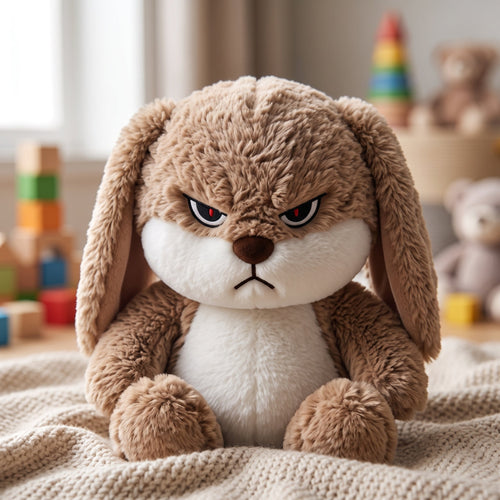
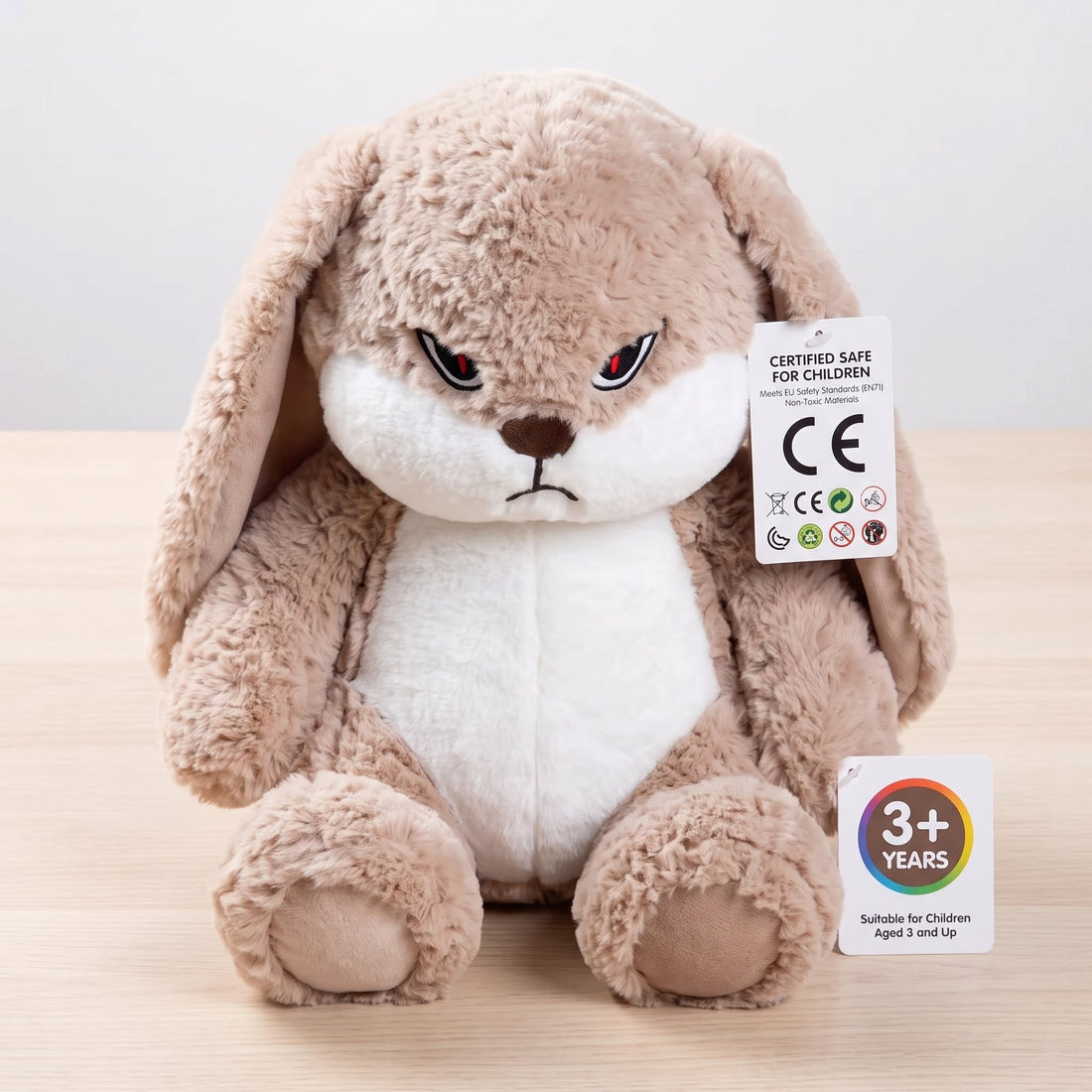
What about the angry rabbit plush and similar toys? A plush that is CE certified, free of harmful chemicals, and rated 3+ is made to be safe for children in that age range as well as adults. The rest of this guide explains what CE certification covers, what makes a plush safe, and how to keep it safe at home.
What CE Certified Means
What does CE certification really mean for a plush toy? It shows the product meets European Union safety, health, and environmental standards. For toys, that covers a specific set of rules designed to protect children. A CE mark is a maker’s declaration that the toy complies.

CE certification for toys generally covers:
-
Material safety, with no harmful chemicals
-
Small parts rules, to reduce choking risk
-
Flammability standards, so fabric resists easy burning
-
Mechanical safety, like secure seams and parts
Why is the CE mark a useful sign? It tells you the toy has been assessed against toy safety requirements, not just sold on trust. While the maker applies the mark, doing so falsely is illegal in the EU, so it carries real weight. A CE mark on a plush is a strong starting point for safety.
Does CE certification cover everything? It covers a broad set of safety rules, but it does not replace common sense at home. A certified plush is still meant for its age range, and very young children still need supervision. The mark confirms the toy itself meets standards, while safe use is up to the carer.
How do you check for CE certification? Look on the label, tag, or packaging for the CE mark and any safety notes. Reputable sellers state certification clearly in the listing. A plush described as CE certified with no harmful chemicals, like many at Plushie Patch, gives you a documented safety basis. Missing or vague safety info is a reason to look more closely before buying.
Other Safety Marks to Look For
Beyond CE, other marks and notes can signal a safe plush. Knowing them helps you judge a toy’s safety more fully. What else should you look for on a plush label or listing?
Useful safety signals include:
-
An age rating, like 3+, matched to the child
-
“No harmful chemicals” or non-toxic notes
-
Material details, such as cotton and PP cotton
-
Other regional marks, depending on where you live
Why do age ratings matter alongside certification? A rating tells you the toy suits a specific age group. A 3+ plush, for example, may not suit a baby who mouths everything, even if it is certified. Matching the toy to the child’s age is as important as the safety mark itself. Always read the rating before giving a toy to a young child.
Material notes add reassurance. A plush described as made with safe cotton fabric and PP cotton filling, with no harmful chemicals, tells you what your child will touch and cuddle. Clear material info is a sign of a careful, transparent maker. Vague or missing details are a reason for caution.
Do different countries use different marks? Yes. The CE mark is European, while other regions have their own toy safety marks and standards. Wherever you are, look for recognized certification relevant to your area, plus an age rating and material info. A plush that lists certification, a clear age rating, and safe materials gives you a well-rounded picture of its safety.
What Makes a Plush Safe
Beyond labels, what physically makes a plush safe for a child? The build and materials do. A safe plush is well-stitched, made from safe components, and free of hazards a child could reach. Knowing the signs helps you judge a toy in hand.
Here is what a safe plush looks like:
|
Feature |
Safe version |
Why it matters |
|---|---|---|
|
Stitching |
Tight, secure seams |
Stops filling leaks |
|
Eyes/features |
Embroidered or firmly fixed |
No small parts to swallow |
|
Filling |
Clean, even PP cotton |
Safe and hygienic |
|
Fabric |
Soft, non-toxic cotton |
Safe against skin |
|
Certification |
CE certified |
Meets safety standards |
|
Age rating |
Matched to the child |
Suits the child’s stage |
Stitching is a big factor. Tight, secure seams keep the filling inside, where it belongs, and stop a toy from coming apart. Loose threads or gaps are a warning sign, since leaking filling is a hazard for young kids. Give seams a gentle tug to check they hold before handing a plush to a child.
Features like eyes and noses deserve a close look. Safe plushies use embroidered features or very firmly fixed ones, so there are no small parts a child could pull off and swallow. Plastic eyes that feel loose are a choking risk. Embroidered faces, like those on many soft kawaii plushies, are a safer design for young children.
What about the filling and fabric? Clean PP cotton filling and soft, non-toxic cotton fabric are the safe standard. The child cuddles these closely, so they should be free of harmful chemicals. A plush that combines secure stitching, fixed features, safe materials, and certification is built to be safe, which is what you want for any child’s toy.
Age Ratings and Why They Matter
Why do age ratings appear on plush toys, and how seriously should you take them? Very seriously. An age rating reflects safety testing for a specific age group, so it guides whether a toy suits a particular child. Ignoring it can put a young child at risk.
Age ratings matter because:
-
They reflect testing for that age group’s needs
-
Younger children mouth and pull toys more
-
Small parts may suit older kids but not babies
-
They guide safe gifting, matching toy to child
Why are babies treated differently? Very young children explore with their mouths and hands, so toys for them must have no small parts and meet stricter rules. A 3+ rating means the toy is not designed for babies under three, often because of small components or other factors. Respecting that keeps the youngest children safe.
Does a 3+ rating mean a plush is unsafe for adults or teens? Not at all. The rating is a minimum age, so the toy suits everyone at or above it, including teens and adults who buy plushies for comfort or decor. The angry rabbit plush, rated 3+, suits kids in that range and grown-ups alike.
How should age ratings shape your buying? Match the toy to the child receiving it. For a baby, choose toys made for that age. For a child over three, a 3+ certified plush is generally suitable with supervision. Reading the rating before you buy or gift is a simple, important step that keeps a plush a safe, happy part of a child’s day.

Safety Tips for Plush Toys at Home
Buying a safe plush is the first step, but safe use at home matters too. How do you keep a plush toy safe once it is in your child’s hands? A few habits cover it, especially for younger children.
Helpful home safety habits:
-
Supervise very young children during play
-
Check seams regularly for wear or gaps
-
Keep cribs clear of large plushies for babies
-
Clean plushies to keep them hygienic
-
Remove any toy that becomes damaged
Why supervise young children with plushies? Even a safe toy benefits from a watchful eye, since toddlers test toys in unexpected ways. Supervision lets you catch any issue, like a loose thread, before it becomes a problem. For babies, follow safe-sleep advice and keep large soft toys out of the crib.

Regular checks keep a plush safe over time. Toys wear with use, so inspect seams, features, and fabric now and then. A small loose thread is easy to fix early, while a large gap leaking filling means the toy needs repair or retirement. A quick check during cleaning keeps the plush in safe shape.
Why does cleaning matter for safety? A plush gathers dust and germs with use, so gentle cleaning keeps it hygienic for a child to cuddle. Surface clean often, and wash gently when needed, following the care label. A clean, well-maintained, certified plush, used with normal care, stays a safe and comforting companion for your child.
Red Flags to Avoid When Buying
Some plush toys raise safety concerns, so knowing the warning signs helps you avoid them. What red flags should make you put a plush back? A few clear ones stand out.
Watch for these warning signs:
-
No safety certification or age rating listed
-
Loose or small parts that could detach
-
Strong chemical smells, hinting at unsafe materials
-
Very low prices with no safety information
-
Poor stitching visible in photos or reviews
Why is missing certification a red flag? Without a CE mark or equivalent, you have no proof the toy met safety standards. A reputable seller states certification clearly. Vague or absent safety info suggests the toy may not have been tested properly, which is a reason to choose a different one, especially for a child.
A strong chemical smell is another warning. Safe plushies should not reek of chemicals, since that can point to unsafe dyes or treatments. Loose plastic eyes, weak seams, or detachable parts are hazards too, particularly for young kids. Inspect a plush, in person or through clear photos and reviews, before trusting it with a child.
What about very cheap, unbranded plushies? A rock-bottom price with no safety details is a common red flag. Quality and safety cost something, so a suspiciously cheap toy may cut corners. Choosing a certified plush from a transparent seller, like Plushie Patch with its CE-certified, no-harmful-chemicals toys, helps you avoid the risks that come with uncertified bargains.
Reviews and photos add another layer of checking. Real buyers often mention if a toy arrived with loose parts, a chemical smell, or weak seams, which a polished product photo will not show. Reading a few reviews before buying gives you a clearer picture of the real item. Clear close-up images that match the listing, plus consistent positive feedback on quality, are good signs. Sparse reviews, no photos, and no safety detail together should push you toward a better-documented option for a child.
Keeping a Plush Safe Over Time
A plush that starts safe can wear down, so ongoing care keeps it safe for years. How do you maintain a plush so it stays a safe toy? Simple, regular attention does it.
Steps to keep a plush safe over time:
-
Inspect seams and features every so often
-
Repair small issues early, before they grow
-
Clean gently to keep it hygienic
-
Retire any toy too worn to fix safely
Why do regular inspections help? Toys take wear from cuddles, washes, and play. A seam that loosens or a feature that works free becomes a hazard if missed. A quick check now and then catches these early. Stitch up a small gap promptly, and the plush stays safe and whole.
When should a plush be retired? When damage cannot be safely fixed, such as a seam that keeps splitting or filling that leaks badly. A well-loved plush has a long life with care, but safety comes first for a child. Keep up gentle cleaning and timely repairs, and a quality, certified plush stays a safe, comforting friend for years.
Frequently Asked Questions
Are plush toys safe for kids?
Plush toys are safe for kids when they meet safety standards and suit the child’s age. Look for CE certification, an age rating like 3+, safe materials, secure stitching, and fixed features. Cheap, uncertified toys carry more risk. With a certified, well-made plush and normal supervision, soft toys are a safe, comforting choice.
What does CE certified mean for a plush toy?
CE certified means a toy meets European Union safety standards, covering material safety, small parts, flammability, and secure construction. The mark is the maker’s declaration that the toy complies, and false use is illegal in the EU. A CE-certified plush gives you a tested safety basis rather than an untested claim.
Are plush toys safe for babies?
Babies need extra care, since they mouth and pull toys. Many plushies carry a 3+ rating and are not designed for babies under three. For infants, choose toys made specifically for that age, follow safe-sleep advice, and keep large soft toys out of the crib. Always match the toy to the child’s age.
How do I check if a plush is safe?
Look for CE certification, an age rating, and “no harmful chemicals” notes on the label or listing. Check that seams are tight, features are embroidered or firmly fixed, and the fabric has no strong chemical smell. Avoid cheap, uncertified toys with vague safety info, and inspect the plush before giving it to a child.
How do I keep a plush toy safe over time?
Inspect seams and features regularly, repair small issues early, and clean the plush gently to keep it hygienic. Supervise young children during play, and follow safe-sleep guidance for babies. Retire any toy too worn to fix safely. Regular care keeps a quality, certified plush safe and comforting for years.